
Why Unlimited Messaging Matters for Public Programs
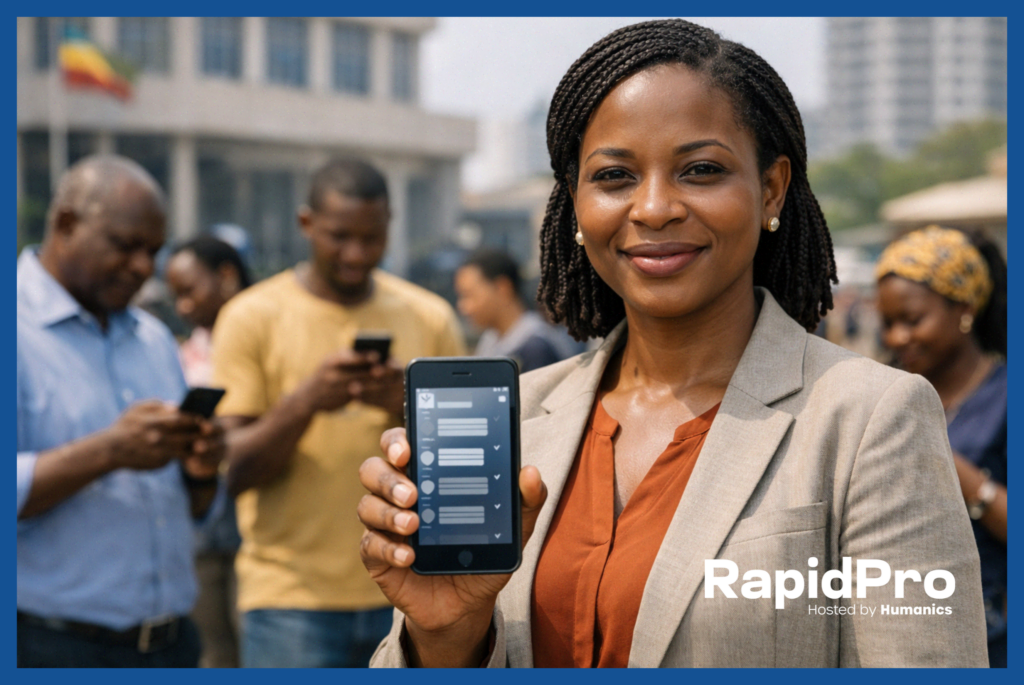
Imagine a government health department needing to send urgent SMS alerts to millions of citizens during an outbreak, or an NGO running an education campaign via WhatsApp across multiple regions. In these scenarios, reaching everyone quickly is non-negotiable. Yet all too often, traditional messaging platforms impose caps or high per-message fees that force public sector teams to choose between scale and cost. The result? Critical updates might only reach a fraction of the intended audience, undermining the program’s impact. This is why unlimited messaging isn’t just a luxury; it’s a necessity for public programs.
In the public sector and nonprofit space, communication at scale can save lives and drive social change. Unlimited messaging allows agencies and organisations to engage every citizen or beneficiary who needs information, without worrying about hitting monthly caps or budget-busting overage charges. Moreover, a solution built for unlimited outreach must also deliver on security, compliance, and reliability, because handling sensitive data and mission-critical communications demands nothing less.
Below, we explore how unlimited messaging empowers public programs, the pitfalls of limited platforms, and what to look for in a secure, reliable messaging solution for government and NGO initiatives.
The High-Stakes World of Public Sector Messaging
Public sector messaging initiatives, from health hotlines and emergency alerts to voter registration drives, operate on a massive scale. These programs often have millions of contacts to reach and need to broadcast information rapidly. Text messaging (SMS) and chat apps have become go-to channels for this because of their ubiquity and immediacy. In fact, SMS boasts open rates as high as 98%, far outpacing email’s ~20% average. When a text arrives, people read it, making SMS and mobile messaging incredibly effective for urgent or important updates. For governments and NGOs, mobile messaging is an invaluable tool for keeping communities informed and engaged.
However, high engagement is only an advantage if you can actually reach everyone in your target audience. This is where the challenges begin. A public health campaign might need to message 100% of households in a region with vaccine reminders or disease prevention tips. A disaster relief program might require blasting real-time instructions to every resident in an affected area. If your messaging platform limits you to 10,000 messages a month or charges for every text beyond a small quota, you’re forced to either leave people out or blow through your budget. Unfortunately, many traditional messaging solutions (and even some modern platforms) were not designed with nation-scale public deployments in mind. They come with built-in ceilings that can inadvertently hamstring your program’s reach.
Limitations of Traditional Messaging Platforms
Limited messaging quotas and unexpected costs are a common headache with off-the-shelf communication tools. Many SMS service providers operate on a pay-per-message model or have tiered plans that cap the number of messages and contacts. This might be fine for a small campaign, but it quickly breaks down at the public sector scale:
- Pay-per-SMS expenses add up: With typical fees of about $0.005–$0.01 per SMS, sending out 100,000 texts could cost hundreds of dollars, and a campaign of 1 million messages might run into the thousands. For a budget-conscious agency, these costs directly limit how many people you can reach. Teams often must shorten campaigns or target only high-priority groups to contain expenses.
- Contact and monthly message caps: Many platforms set hard limits on how many people you can message or how many messages you can send per month unless you upgrade to a pricier plan. Hitting these caps means either halting your outreach or paying steep overage fees. For example, a service like TextIt (a commercial hosted RapidPro platform) advertises unlimited messages for a low fee, but restricts you to 1,000 active contacts in the base plan. Each additional contact incurs extra cost, meaning a program with 100,000 participants would face significant monthly fees. These kinds of limits effectively penalise you for having a large audience.
- Scaling bottlenecks: Traditional systems not built for high throughput can falter when you try to send millions of messages or handle huge contact lists. Messages might get delayed, delivery rates can suffer, or the system might even crash under peak load. In a crisis or large public program, such slowdowns are unacceptable; every minute of delay could matter.
- Complex pricing and hidden fees: With some providers, you discover additional charges for things like dedicated short codes, keywords, or integration add-ons. The pricing complexity makes it hard to predict costs, and a massive outreach might yield a budget surprise. Public agencies usually need transparency and predictability, which these models don’t always offer.
The bottom line is that traditional messaging platforms impose artificial limits on your communications. Organisations end up trimming their contact lists or reducing message frequency to avoid breaking the bank. For instance, an NGO might only text 50,000 out of 200,000 eligible recipients because they can’t afford a full-scale blast, thus blunting the impact of their program. Important initiatives should not be held back by software or pricing constraints; that’s where an unlimited messaging approach comes in.
Unlimited Messaging: Reaching Everyone Without Limits
Adopting an unlimited messaging model transforms how public sector teams plan and execute their outreach. When your platform imposes no set caps on messages or contacts, a few key benefits emerge:
- Reach every intended recipient: With no ceiling on the number of contacts, you can continually grow your database from thousands to millions of people without pruning. Every citizen, client, or beneficiary who opts in can remain in your system. Universal reach is especially critical for government programs mandated to serve all constituents, or for NGOs aiming to include marginalised groups rather than just the easiest-to-reach segments.
- Scale up without skyrocketing costs: Unlimited messaging typically comes with a flat platform fee rather than per-message billing. Whether you send 100 messages or 10 million, your platform cost remains the same. (You still pay mobile carriers or gateways for the SMS or data traffic, but the messaging software doesn’t add its own toll.) This means the marginal cost per message drops near zero on the platform side. Organisations can confidently scale up campaigns knowing that a surge to a million texts won’t trigger a budget crisis. For example, switching to a flat-rate unlimited plan saved one national health program over 90% in platform fees compared to a pay-as-you-go model, and sending millions of SMS became financially feasible where it wasn’t before.
- Frequent and richer engagement: When you’re not counting pennies on each text, you have the freedom to increase your messaging frequency and craft multi-part interactions. Want to send weekly tips or daily reminders? Go for it, frequent touchpoints can greatly improve outcomes (like better medication adherence or higher survey response rates). Unlimited messaging empowers program designers to use messaging more creatively: an agriculture ministry could run an ongoing series of farming advice texts, or a school system could implement two-way quiz programs, all without fear of hitting a quota.
- No “campaign kill-switch” moments: A true unlimited platform has no hidden off-switch that stops your campaign because you hit a limit. There’s immense peace of mind in knowing your successful outreach won’t be abruptly halted this month, nor will you be forced into an emergency upgrade. The only limit becomes your ambition, not the software. If a pilot project suddenly needs to scale to a national rollout, you can do it immediately, no red tape or waiting for a bigger license.
In short, unlimited messaging ensures your public program can scale to its full potential. Instead of asking “how many people can we afford to reach?”, your team can ask “how many people need this information?” and plan accordingly. That’s a game-changer for public sector missions. Now, how do you achieve this unlimited messaging capability in practice? The answer lies in choosing the right platform and hosting environment, which brings us to RapidPro.
RapidPro Hosting: Unlimited Messaging with Security and Compliance
One proven route to implement unlimited messaging for large programs is using RapidPro, an open-source messaging platform originally developed with UNICEF. RapidPro is purpose-built for large-scale, interactive communication flows via SMS, WhatsApp, and other channels. It has powered national health hotlines, education campaigns, and more in over 50 countries. The key, however, is not just using RapidPro, but using it in a way that removes usage limits and provides strong security and compliance out of the box. This is where managed RapidPro hosting comes in.
RapidPro hosting means running the RapidPro platform on a dedicated server or cloud environment, often through a specialised provider who handles all the technical setup. Rather than self-hosting (which can be complex and resource-intensive), many public institutions opt for a fully managed RapidPro hosting service. The right host will offer unlimited usage of RapidPro, meaning no caps on messages, contacts, or workflows, all for a predictable flat fee. This model lets governments and NGOs deploy nationwide messaging systems without worrying about license limits or surprise bills.
Equally important, managed RapidPro hosting addresses the stringent security and compliance requirements of the public sector:
- Data security: All messages and personal data in your RapidPro system can be encrypted in transit and at rest. Enterprise-grade hosting providers use measures like TLS encryption (often FIPS-compliant) for data in motion, and encrypted databases for data at rest. This ensures sensitive citizen information stays protected, which is crucial for government programs dealing with health records or personal details.
- Compliance features: Public programs must adhere to laws like GDPR (in Europe) or sector-specific regulations for privacy and communications (for example, TCPA in the US, which governs texting consent). Leading RapidPro hosting solutions include compliance tools to manage user consent, opt-ins/opt-outs, data retention policies, and the ability to purge data on request. These built-in features make it much easier to stay compliant with regulations while running large messaging campaigns.
- Access control and privacy: Managed platforms often support role-based access control and multi-user logins. This means a government agency can ensure that only authorised staff can send messages or view certain data. You can partition projects by department or region (using separate workspaces or instances) and maintain strict oversight with audit logs of who did what, when. Such controls prevent misuse of the system and protect sensitive contact data.
- Reliable infrastructure: Top providers use cloud hosting with auto-scaling, load balancing, and backups. Many guarantee 99.5%+ uptime with failover, so your service stays online 24/7. Regular backups ensure your data stays safe and can be restored if needed.
- 24/7 monitoring and support: Public programs often operate around the clock. That’s why managed hosts monitor your RapidPro instance 24/7 and can respond to issues immediately. If something goes wrong at 3 AM, experts are on-call to fix it right away. This kind of support means you’re never on your own during a mission-critical campaign.
Crucially, by using a managed unlimited messaging platform like RapidPro with professional hosting, you’re not trading off quality for quantity. You get both: unlimited scale and enterprise-grade service. As our team at RapidPro App likes to say, the goal is to let you focus on your mission while we handle the technical heavy lifting. In practice, that means your staff can put their energy into crafting effective messages and analysing responses, not maintaining servers or counting message credits.
Reliability and Impact at Scale
When unlimited messaging is paired with strong security and rock-solid reliability, it unlocks some powerful outcomes for public programs:
- Instant national broadcasts: Need to reach an entire country’s population with an SMS alert? Unlimited messaging on a scalable infrastructure makes this feasible. Several countries have used RapidPro-based systems to send COVID-19 advisories or vaccination reminders to tens of millions of people within hours, something that would be impractical on a limited plan or manual calling tree.
- Two-way engagement at large scale: Public communication isn’t just about broadcasting; it’s also about listening. Unlimited messaging allows large-scale two-way interactions, for instance, a citizen feedback program where millions can text in their questions or needs. With no per-message cost to worry about, agencies can encourage engagement, knowing the platform can handle the volume of incoming and outgoing messages.
- Better resource allocation: Predictable flat pricing for unlimited messaging means budgeting is straightforward. Instead of reserving large contingency funds for potential overage fees, public organisations can allocate more of their budget to program content, outreach personnel, or other needs. This makes the overall initiative more cost-effective and sustainable. As noted in one case study, moving to an unlimited model allowed an NGO to reallocate savings into expanding its on-the-ground services, essentially turning what would have been platform fees into direct program impact.
Conclusion: Embrace Unlimited Messaging for Public Good
The missions of governments and NGOs are too important to be constrained by arbitrary messaging limits. Unlimited messaging matters for public programs because it removes a barrier to reaching everyone who needs to be reached, whether that’s every citizen in a crisis or every last beneficiary in a social initiative. By coupling unlimited capacity with the right platform, public sector teams can deliver timely information and engage communities at a scale never before possible, all with the confidence that their system is secure, compliant, and dependable.
If you’re involved in a public sector or nonprofit program that relies on communication, it may be time to ditch the limitations of traditional SMS services. Consider a solution like RapidPro hosting that offers unlimited messaging along with enterprise-level security and support. RapidPro.app, for example, provides a turnkey hosted RapidPro platform built specifically for these needs. Our solution gives governments, NGOs, and enterprises a way to launch large-scale messaging systems quickly and safely, with transparent flat pricing and no hidden fees. You get to concentrate on your mission, and we handle the infrastructure and compliance behind the scenes.
Ready to unlock the full potential of your outreach? Take the next step and Request Your Demo today. Experience how unlimited messaging, backed by a secure and reliable platform, can transform your public program’s communications. Don’t let message caps or IT worries hold you back, embrace the power of unlimited messaging and maximise your impact on the communities you serve.
FAQ: Unlimited Messaging in Public Sector Programs
Q1. What does “unlimited messaging” mean for a public sector platform?
“Unlimited messaging” means the messaging system does not impose a fixed limit on how many messages you can send or how many contacts you can have. For public sector programs, this is critical; it means you can reach an entire population without worrying about hitting a quota. On an unlimited plan, whether you send 1,000 messages or 1,000,000+, the platform’s own fees remain the same. (You will still pay telecom providers for SMS delivery or data usage, but the platform won’t charge you more for higher volume.) Essentially, unlimited messaging removes artificial barriers, allowing government or NGO communicators to scale outreach as big as needed.
Q2. How is RapidPro hosting different from other messaging solutions like TextIt or Twilio?
RapidPro is an open-source messaging platform tailored for large-scale, interactive communications (developed by UNICEF and partners). RapidPro hosting means you’re using that robust platform, but having it managed for you, the installation, servers, and maintenance are handled by a provider like RapidPro.app. The big difference is that a service like RapidPro.app offers unlimited usage; you get unlimited messages, contacts, and workflows for a flat fee. In contrast, other platforms have limitations: for instance, TextIt provides unlimited messaging but charges based on the number of contacts (which can become very costly as your audience grows), while Twilio (an SMS API) charges per text message. RapidPro hosting gives you a full-featured platform (supporting SMS, WhatsApp, etc.) with enterprise features and no usage caps, which is ideal for public sector needs. It’s like having a dedicated, secure communication system without needing to build or cap it yourself.