
Malaria Prevention in Tanzania: How Targeted Campaigns Deliver Measurable Impact at Scale
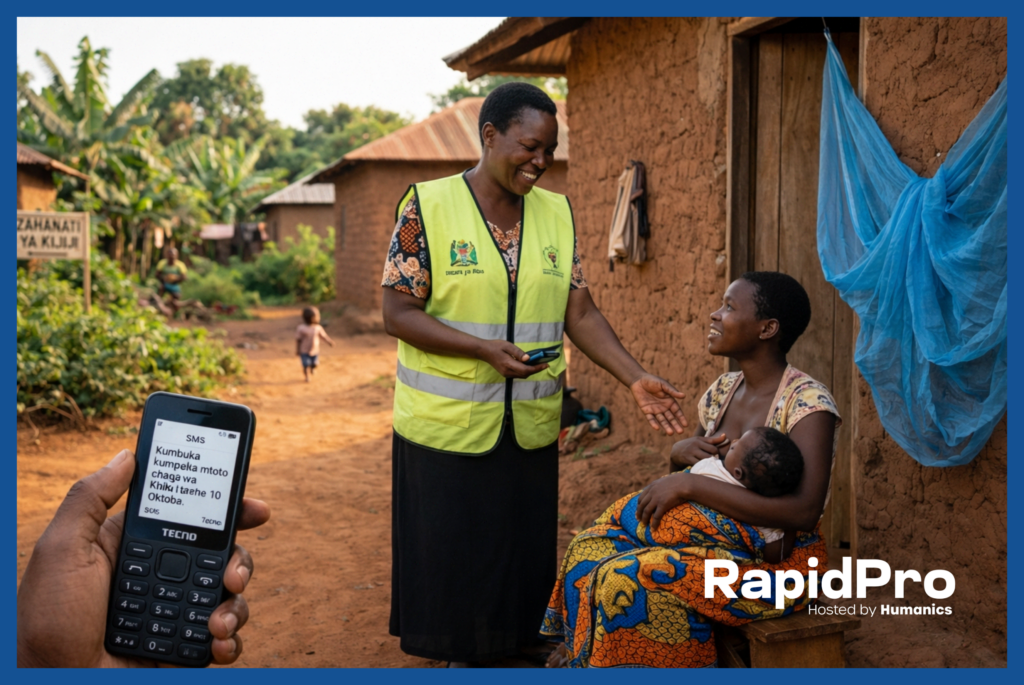
A child dies from malaria every two minutes in Africa. In Tanzania, this disease accounts for nearly 30% of all outpatient consultations and remains one of the leading causes of under-five mortality. Yet the challenge is not only medical; it is fundamentally communicational.
Malaria prevention in Tanzania has long been constrained by one structural failure: the inability to reach dispersed, high-risk communities with consistent, timely, and behaviorally relevant messaging. Health workers are overwhelmed. Rural zones around Lake Victoria, Lake Tanganyika, and the southern coastal lowlands remain chronically underserved. Prevention materials arrive late, or not at all.
And yet, Tanzania is not without infrastructure. Mobile penetration exceeds 85%. SMS reaches basic handsets across the most remote wards. Community health workers are trusted; they simply lack the coordination systems to act at scale. What is missing is not willingness. It is the communication backbone capable of connecting meteorological data, health advisories, and local health workers into a single, intelligent, measurable outreach loop. That backbone exists today. It is called RapidPro App.
This article presents a hypothetical yet operationally grounded scenario: how a dedicated RapidPro App instance, deployed by Tanzania’s Ministry of Health and partner NGOs, could transform seasonal malaria prevention into a precision, data-driven, fully accountable public health communication system, reaching hundreds of thousands of households at a cost far below any conventional intervention.
Of Tanzanian malaria cases, concentrated in just 5 high-risk regions
Potential reduction in new cases through consistent behavioural nudges
Data required on the recipient’s device — SMS works on any basic phone
Tanzania’s Malaria Crisis: A Communication Failure as Much as a Health One
Malaria is not uniformly distributed across Tanzania. It clusters in geographically defined, chronically under-resourced zones where mobile health infrastructure is weakest and seasonal transmission risk is highest. Understanding this geography is the first step toward designing campaigns that actually work.
Three regions concentrate the overwhelming majority of Tanzania’s malaria burden:
- ●
The Lake Victoria Basin (Mwanza, Kagera, Mara): perennial, year-round transmission with parasite prevalence among children under five consistently exceeding 40% in the highest-burden wards. - ●
The Lake Tanganyika Shoreline (Kigoma): remote access, acute shortage of health infrastructure, and seasonal spikes that overwhelm district health facilities. - ●
Rural Coastal and Southern Lowland Zones (Lindi, Mtwara, Pwani): seasonal peak transmission aligned with long rains, minimal community health worker coverage, and historically low bed net utilisation rates.
According to Tanzania’s National Malaria Control Programme (NMCP), transmission intensity in these endemic zones can be five to ten times higher than in highland areas. Yet prevention messaging, when it arrives, tends to be generic, poorly timed, and impossible to track. The consequence is predictable: millions of households receive no actionable guidance at the precise moment when preventive action would matter most.
Why Conventional Malaria Communication Consistently Falls Short
- ●
Community health worker visits are physically constrained; a single CHW may serve a 10km radius with no digital coordination tools, meaning critical seasonal windows pass before households are reached. - ●
Radio and television broadcasts transmit information unidirectionally, cannot confirm receipt, and fail to penetrate communities with unreliable electricity access. - ●
Printed materials and posters reach only those who visit health facilities, excluding precisely the communities with the lowest care-seeking rates. - ●
No feedback loop exists: campaign managers cannot confirm delivery, measure behavioural uptake, or identify the zones with lowest engagement in time to adjust.
“
A malaria prevention message that cannot be confirmed, tracked, or followed up on is not a campaign; it is a broadcast into silence. RapidPro App transforms that broadcast into a two-way, evidence-generating public health conversation.
What RapidPro App Brings to Malaria Prevention in Tanzania’s High-Risk Regions
RapidPro App is a fully managed, enterprise-grade hosting solution built on the open-source RapidPro platform, the same technology trusted by UNICEF, WHO, and national health ministries for large-scale citizen engagement, disease surveillance, and community health communication. Unlike raw open-source deployments, RapidPro App removes all server management complexity, delivering a secure, immediately operational instance at transparent, affordable pricing.
For Tanzania’s health communication ecosystem, this translates into one decisive strategic advantage: speed of deployment combined with unlimited geographic scale. A RapidPro instance can be configured and operational within weeks, meaning campaigns can launch before the peak transmission season begins, not after it ends.
A Malaria Awareness Platform Built for Tanzania’s Last Mile
In a malaria prevention scenario for Tanzania’s high-risk zones, the Ministry of Health, regional health directorates, and implementing NGOs could deploy the following capabilities through a single RapidPro App instance:
Deliver targeted malaria prevention reminders, bed net usage, fever care-seeking, household spraying, to registered households in endemic wards precisely when transmission risk peaks, with no internet required on the recipient’s device.
Households reply with keywords — “NET”, “FEVER”, “SPRAY” — triggering automated workflows that confirm preventive action, log behavioral data, or escalate symptomatic cases to the nearest Community Health Worker for follow-up.
Community health workers receive daily task lists, household visit assignments, and urgent case escalations via SMS, ensuring coordinated, verifiable field coverage without requiring smartphones or internet connectivity.
Campaign managers access live metrics: message delivery rates by ward, behavioral uptake indicators, CHW reporting compliance, and zone-level risk flags, all the data donors and Ministry reporting cycles require, generated automatically.
Health ministries and NGOs running malaria awareness campaigns across sub-Saharan Africa are deploying managed RapidPro platforms to automate, scale, and measure their community health communication programs. Discover how RapidPro App powers large-scale public health campaigns →
A Hypothetical Deployment: Malaria Prevention Campaign Step by Step in Mwanza Region
The following scenario is illustrative but operationally grounded in RapidPro App’s verified capabilities, informed by successful public health deployments across Kenya, Uganda, and Ghana. Imagine the Tanzania NMCP activates its RapidPro instance as meteorological data signals the onset of the long rains across Mwanza and Kagera, the two highest-burden Lake Victoria basin regions.
An NMCP campaign coordinator activates a pre-built RapidPro flow. Within minutes, geo-targeted SMS messages reach 80,000+ registered households across high-transmission wards: bed net usage reminder, household spraying guidance, and a single-keyword confirmation prompt, delivered in Swahili, accessible on any handset.
Households reply via SMS. RapidPro’s automated flow categorises every response in real time: “NET” triggers a behavioural confirmation log; “FEVER” routes an escalation alert to the nearest CHW for urgent follow-up; “HELP” opens a structured triage flow providing first-line guidance and facility referral details.
Community health workers in at-risk wards receive their daily priority visit lists, automatically generated from households that reported fever or did not confirm preventive action. CHWs log their home visit outcomes via a simple SMS menu, feeding real-time compliance data back into the campaign dashboard.
Weekly follow-up messages are pushed to all registered households throughout the transmission season, adapting messaging based on prior engagement patterns: non-responders receive reinforced prompts; households with confirmed cases receive detailed care-seeking guidance and referral coordinates for the nearest diagnostic facility.
All collected data feeds into a structured end-of-campaign report: reach metrics by zone, behavioural uptake rates, CHW field visit coverage, gender-disaggregated engagement data, and estimated cost-per-household-reached, delivering precisely the evidence accountability that Ministry reporting and international donor cycles require.
Every component described above is a native RapidPro App capability, deployable today, on infrastructure that Tanzanian households already carry in their pockets.
Comparing Malaria Awareness Campaign Approaches: Why Targeted Digital Outreach Leads
Not all malaria communication channels deliver equal reach, engagement, or evidence. The table below maps the structural advantages of a managed RapidPro deployment against conventional outreach methods deployed in Tanzania’s high-risk malaria regions.
| Communication Approach | Two-Way | Works Without Internet | Scalability | Impact Measurable |
|---|---|---|---|---|
| CHW Field Visits Only | Yes: but 1-on-1 | N/A — Physical | Very Limited | Manual Only |
| Radio / Community Broadcasting | No | Needs Power | Moderate | Not Possible |
| Printed Materials & Posters | No | Yes, but passive | Limited | None |
| WhatsApp Only | Yes | Needs Internet | Urban Only | Partial |
| RapidPro App (SMS + WhatsApp + USSD) | Yes: automated at scale | Yes: SMS Native | Unlimited | Real-Time |
Beyond a Single Season: Building Year-Round Malaria Communication Infrastructure in Tanzania
The strategic value of deploying a managed RapidPro instance for malaria prevention extends well beyond a single transmission season. For agencies such as Tanzania’s Ministry of Health (MoH), the NMCP, or international NGOs operating across the region, a standing RapidPro instance creates durable digital infrastructure for year-round community health engagement:
- ✓
Seasonal Transmission Calendars: Deploy targeted reminder sequences aligned with Tanzania’s long and short rains, automatically triggered when meteorological risk thresholds are met in each endemic zone. - ✓
Antenatal Care Integration: Send IPTp (Intermittent Preventive Treatment in Pregnancy) reminders to registered pregnant women in high-risk areas, linking behavioural nudges to scheduled ANC visit windows. - ✓
Bed Net Distribution Support: Coordinate distribution campaigns with geo-targeted SMS logistics, confirming household receipt, flagging uncovered zones, and generating distribution coverage reports in real time. - ✓
Fever Case Surveillance: Enable community-level fever reporting via simple SMS keyword flows, creating an early-warning signal network to support timely public health responses and resource allocation. - ✓
Donor-Ready Impact Reports: Every interaction generates structured, exportable data, reach, engagement, behavioural indicators, and cost-per-contact, delivered in formats aligned with WHO and Global Fund reporting standards.
When institutions invest in this kind of infrastructure before the peak transmission season arrives, they are not merely purchasing a messaging tool. They are building the trusted communication channel, behavioural familiarity, and real-time data infrastructure that transforms a reactive crisis response into a proactive, evidence-generating public health program. Malaria does not wait for pilot phases to conclude.
- ✓ Malaria prevention in Tanzania requires geographically precise campaigns, not generic national messaging; endemic zones have fundamentally different transmission profiles that demand calibrated responses.
- ✓ High-risk malaria regions in sub-Saharan Africa share addressable structural characteristics: mobile penetration, CHW networks, and seasonal predictability that make targeted digital outreach both feasible and cost-effective.
- ✓ Technology platforms like RapidPro App transform fragmented, unverifiable outreach into managed, two-way, measurable public health communication programs.
- ✓ Governments gain a replicable policy and operational framework. Donors gain real-time visibility into impact, cost-per-beneficiary metrics, and the evidence-based accountability that international funding cycles require.
“
The ideal malaria prevention campaign should be running before the first rains arrive, not assembled in response to the first outbreak. RapidPro App gives health ministries and NGOs the infrastructure to communicate preventively at scale, and the data to prove it worked when the reporting season comes.
Malaria Prevention at Scale in Tanzania Is Achievable — The Infrastructure Exists Today
Tanzania’s malaria burden is not going to diminish without deliberate, sustained, and measurable prevention communication. The epidemiological projections are clear: seasonal transmission in the Lake Victoria basin and coastal lowlands will continue to peak without coordinated early-warning and behavioural change systems capable of reaching the last mile.
What can change and change immediately is the capacity of Tanzania’s health system to communicate with the households it serves when preventive action is still possible. RapidPro App delivers that capacity: through SMS that requires no internet, automated flows that do not depend on sufficient CHW staffing, and live dashboards that turn every household interaction into actionable programme intelligence.
RapidPro App is a turnkey, fully managed hosting solution designed for Ministries of Health, NGOs, and public health agencies ready to deploy interactive community communication systems at scale securely, rapidly, and affordably. Our transparent pricing and dedicated expert support ensure your team is operational long before the next transmission season begins. The technology is ready. The deployment pathway is clear. The only remaining variable is the decision to act.
Build Tanzania’s Malaria Prevention Communication Backbone, Starting Today
RapidPro App delivers enterprise-grade public health communication at transparent, affordable pricing. Unlimited reach, automated flows, real-time dashboards, and full donor reporting support, no technical overhead required. All the capability you need; none of the complexity you don’t.
Frequently Asked Questions
Everything you need to know about deploying malaria awareness campaigns and SMS-based community health communication systems in Tanzania with RapidPro App.
What is a malaria prevention awareness campaign, and how does it work in Tanzania?
+
A malaria prevention awareness campaign is a structured public health communication initiative designed to reduce disease transmission by driving measurable behavioural change at the community level. In Tanzania, such a system integrates transmission risk data from the NMCP with a mass communication platform like RapidPro App, delivering geo-targeted, season-triggered SMS messages directly to households in high-risk zones. The key differentiator from radio or posters is bidirectional engagement: households confirm preventive actions, report fever symptoms, and provide field data that continuously improves future campaigns.
How does RapidPro App support malaria prevention campaigns in high-risk regions?
+
RapidPro App enables health ministries and NGOs to design automated communication flows that broadcast prevention messages to hundreds of thousands of households simultaneously, collect structured keyword responses, coordinate Community Health Worker follow-up, and generate real-time campaign dashboards, without any manual messaging or server management. Its no-code flow designer allows non-technical public health staff to build, test, and activate campaigns within days. The platform’s multi-channel architecture means the same flows operate across SMS, WhatsApp, and USSD, maximising reach from basic handsets to urban smartphones.
Which organisations in Tanzania could deploy RapidPro App for malaria prevention?
+
Organisations with mandates in community health communication, disease prevention, and public health scale-up stand to benefit most. These include Tanzania’s Ministry of Health (MoH), the National Malaria Control Programme (NMCP), regional health directorates, and international NGOs such as PSI Tanzania, Malaria Consortium, CARE International, and PATH. District health management teams and community health networks could also leverage a shared RapidPro App instance for coordinated, verifiable prevention campaigns across multiple endemic wards simultaneously.
Is RapidPro App suitable for reaching rural communities in Tanzania without smartphones?
+
Yes, this is one of RapidPro App’s most decisive advantages for public health in sub-Saharan Africa. The SMS and USSD channels operate entirely independently of internet connectivity on the recipient’s device. Any basic mobile handset can receive prevention messages and respond with a simple keyword reply. This makes RapidPro App uniquely effective for reaching households in Tanzania’s Lake Victoria basin, Kigoma, and southern coastal zones, where smartphone penetration remains significantly lower than in Dar es Salaam or Arusha. Voice channel options further extend reach to populations with limited literacy or very basic devices.
What measurable outcomes can donors expect from a RapidPro-powered malaria campaign in Tanzania?
+
Donors investing in RapidPro-powered malaria communication campaigns can expect structured, exportable impact evidence, including: total household reach by geographic zone, message delivery and open rates, behavioural confirmation rates (bed net use, care-seeking, household spraying), CHW field visit compliance data, gender-disaggregated engagement metrics, and cost-per-household-reached calculations. These outputs align directly with WHO, USAID, and Global Fund reporting frameworks, reducing the administrative burden on implementing partners while providing the accountability that continued funding requires.